


Key Messages: In Nigeria, a famine “likely occurred in Bama and Banki towns during 2016…although this conclusion cannot be fully verified, a preponderance of the available evidence, including a representative mortality survey, suggests that Famine (IPC Phase 5) occurred in Bama LGA during 2016, when the vast majority of the LGA’s remaining population was concentrated in Bama Town and Banki Town. Analysis indicates that at least 2,000 Famine-related deaths may have occurred in Bama LGA between January and September, many of them young children”
Author: WHES Team
Student-led initiatives aim to promote agriculture on U.S. campuses
Across the United States, students are developing initiatives to promote agriculture and increase access to healthy food on campus. There are different types of initiatives, including student farms, gardens, food cooperatives, food justice programs, food access programs, food waste programs, and food education programs. These initiatives encourage students to learn about sustainable agriculture. They also improve access to healthy food for students and people in the community. Check out these student-led agriculture initiatives from across the U.S.
10 Student-led Initiatives Aiming to Promote Agriculture on U.S. Campuses
Farmer-led irrigation in Africa: Driving a new Green Revolution?
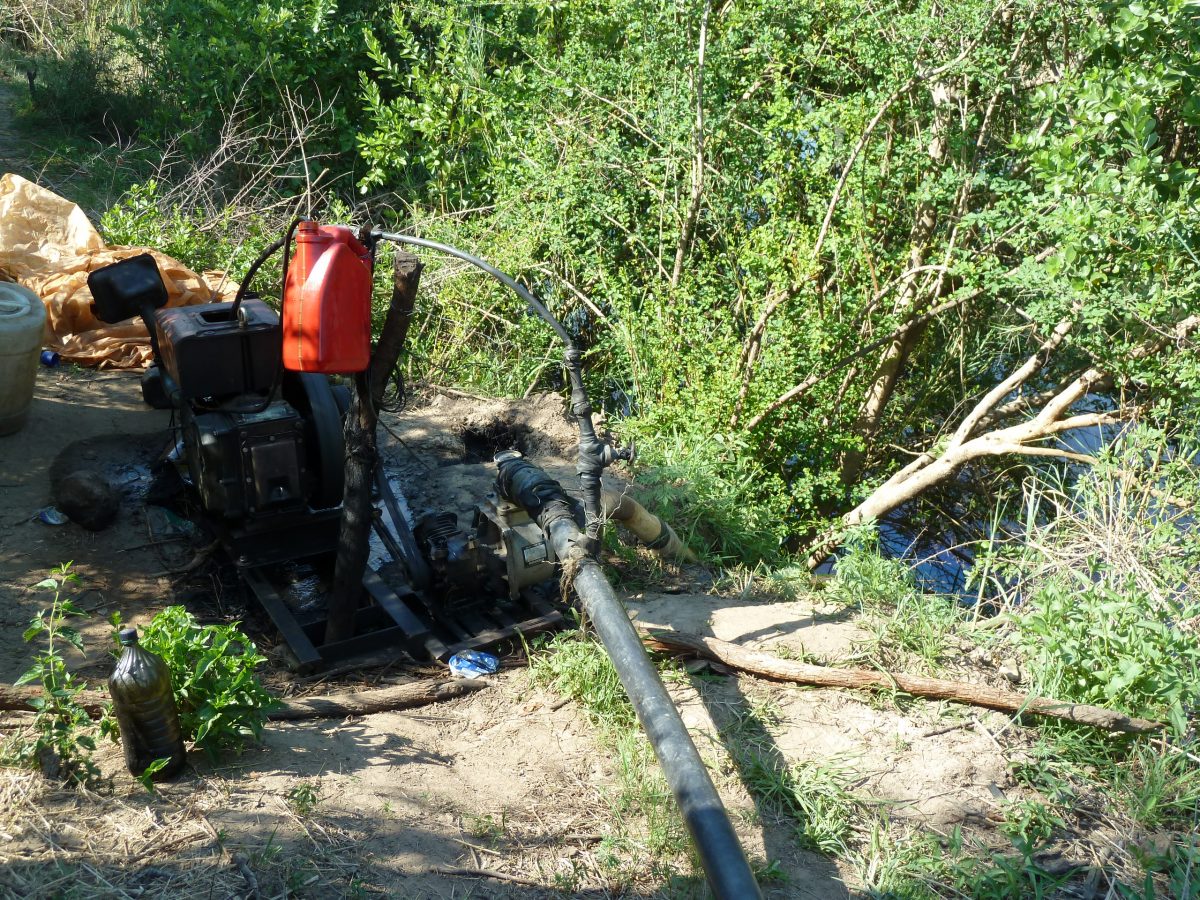
A new open access review paper is just out in the Journal of Peasant Studies on farmer-led irrigation in Africa. The paper offers a fantastically useful overview of the debate about what form of irrigation is most likely to support increases in smallholder production and livelihoods in Africa.
Farmer-led irrigation in Africa: driving a new Green Revolution?
Listen: Food Insecurity-a cause and consequence of conflict

In a world where conflict affects so many communities, it is important to recognize the connection between food insecurity and social unrest. Kimberly Flowers, Director of the Global Food Security Project at the Center for Strategic and International Studies (CSIS), was brought to Rome by U.S. Mission to the United Nations as the keynote speaker at the Food and Agriculture Organization’s (FAO) 13th Annual George McGovern Lecture. She highlighted the connection between conflict areas and food insecurity in her speech entitled, “Examining Linkages: The Nexus between Food Insecurity and Political Instability.”
Dial ‘N’ for Nutrition? A Landscape Analysis of What We Know About m-Nutrition, m-Agriculture and m-Development
Mobile phone technology has the potential to initiate behavior change and facilitate the long-term maintenance of new behaviors. This paper reviews the existing m-agri and m-health interventions. The purpose of this review is to assist would-be implementers and evaluators to understand the landscape they are operating in so they can design nutrition and agriculture interventions that stand the greatest chance of working.
Meet the man using your leftovers to change Washington, DC for the better

Mike Curtin calls himself Washington, D.C.’s food fighter. It’s a title he earns every day by feeding the city’s needy through his organization, DC Central Kitchen, a nonprofit located just a few blocks north of the U.S. Capitol. Curtin’s staff takes leftovers found at local restaurants, wholesalers, and farms and converts those items into more than 5,000 meals a day.
https://www.thrillist.com/eat/nation/meet-the-man-changing-dc-through-food
A new global research agenda for food

Lawrence Haddad, Corinna Hawkes and colleagues propose ten ways to shift the focus from feeding people to nourishing them.
http://www.nature.com/news/a-new-global-research-agenda-for-food-1.21052
Tackling hunger requires addressing the challenge in fragile states

Political instability and climate change continue to threaten global efforts to end hunger and poverty. By 2030, two-thirds of the world’s poor will be living in fragile states, according to the Bread for the World Institute’s “2017 Hunger Report: Fragile Environments, Resilient Communities,” which was released Monday.
https://www.devex.com/news/tackling-hunger-requires-addressing-the-challenge-in-fragile-states-89205
You may be higher up the global wealth pyramid than you think

Pop quiz: Where do you think you fall on the global wealth pyramid? The answer may surprise you…
See full story at http://www.economist.com/news/business-and-finance/21710771-new-analysis-how-worlds-wealth-distributed-you-may-be-higher-up?fsrc=scn/fb/te/bl/ed/
Life on the Pine Ridge Native American reservation

A portrait of poverty in America in a place where life expectancy is the second-lowest in the western hemisphere (after Haiti) and 80 percent of people are unemployed.
See full story at http://www.aljazeera.com/indepth/features/2016/10/life-pine-ridge-native-american-reservation-161031113119935.html
