



HOPE in Gaza
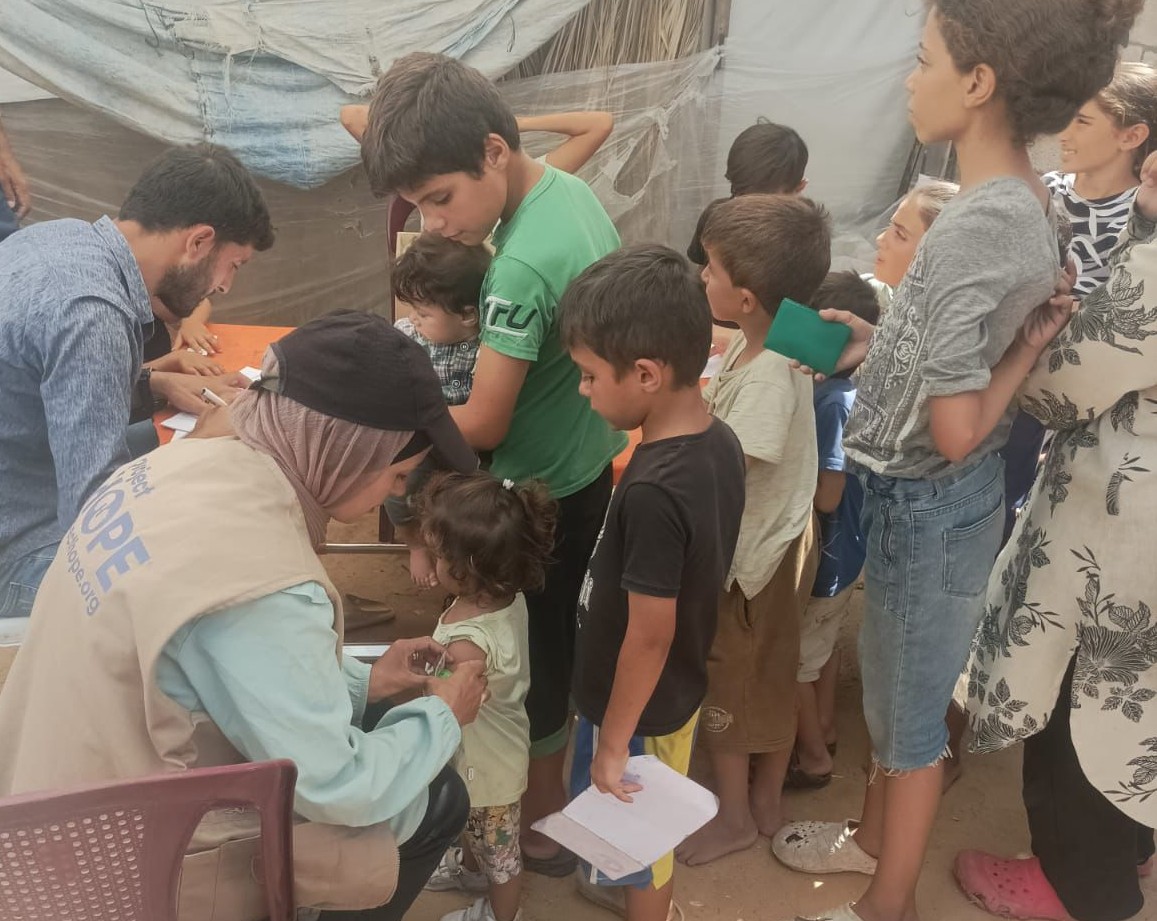
Project HOPE is the recipient of a donation by the World Hunger Education Service (WHES), a non-profit dedicated to educating the public about solving hunger which selected Project Hope to highlight and affirm its excellent work providing recovery foods for malnourished children in Gaza.
Project HOPE supports nutrition through its seven health clinics across Gaza, helping to reach tens of thousands of children with wasting (“acute”) malnutrition, which carries a high risk of death. Gaza has been prone to increased prevalence of malnutrition over the last year or more as food imports and aid from outside, and movement/ distribution within Gaza have been blocked. The highest prevalence of malnutrition has been measured in Gaza City.
Since the October 2025 ceasefire took effect, Gaza has experienced a partial recovery in market activity and food availability across Gaza, but supply shortages, cash-flow constraints, damaged infrastructure, and limited local production continue to hamper both supply and access. Food prices remain far above pre-conflict levels, with many basic commodities costing up to 200% more than before the fighting began. As a result, many households still struggle to afford a diverse diet, with consumption generally limited to staple cereals and pulses while meat, fresh produce, and other nutrient-rich foods remain largely out of reach.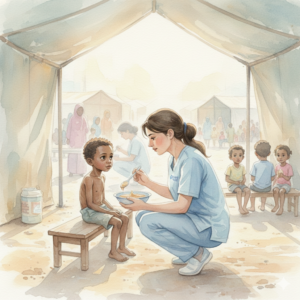
From July 2024 to November 2025, Project HOPE screened 158,884 people for malnutrition, particularly focusing on children under five years of age and pregnant or breastfeeding women. They provide High Energy Biscuits (HEB), Ready-to-Use Therapeutic Food (RUTF), rapid rehydration, and case management for those suffering from malnutrition. RUTF is a food optimized to save the lives of young children who are severely malnourished. They also have provided Psychological First Aid to 18,000 people. and distributed over 2 million liters of potable water.
In Gaza, they operate health clinics in Khan Younis, Gaza City, and Deir al-Balah, providing an average of 1,170 medical consultations a day. Because of their work in Gaza, World Hunger Education Service has granted them an award of $2,500 and recommendation to the public.
Supplies of RUTF are trucked via convoys into Gaza via roughly five border crossing points as palletized cargo. Once inside Gaza, supplies are moved along major routes such as the Philadelphi Corridor and Al Rashid Rd to approximately 23 treatment sites.
Project HOPE is an international non-profit established in 1958. Operating with public support for over 68 years, Project Hope strengthens health systems, combats infectious diseases and deploys emergency response and nutrition teams in crisis zones to provide humanitarian aid. In severe crisis settings (e.g., conflict in Ethiopia, displacement in Gaza and Ukraine), Project HOPE’s emergency response includes clinical care and nutritional support for populations facing acute shortages. They also work with communities and health workers about how to prevent waterborne illnesses like cholera and diarrheal disease.
For much of its history Project HOPE was known for its hospital ship which inspired people to choose careers in foreign aid. Its flagship was originally the USS Consolation, which operated during the Korean war and then converted with 230 beds into a civilian aid ship. Project Hope pioneered the concept of the first peacetime hospital ship operating the S.S. Hope for 14 years. For every American doctor or nurse on board, there was a local professional counterpart. It traveled to many countries including Southeast Asia and South America. Today they work in more than 25 countries across Africa, the Americas, Asia/Pacific, Europe, and the Middle East.
Similar to its work in Gaza, Project HOPE had been a lead US NGOs also responding Ukraine and Lebanon. In Ukraine, the team operates mobile medical units, reconstructs health and social facilities, trains health workers, provides extensive mental health and psychosocial support, and more. In Lebanon, Project HOPE has been working around the clock to support urgent needs, including the distribution of water, sanitation, and hygiene (WASH) supplies and shelter items to displacement sites, as well as procuring essential medicines and medical supplies for hospitals and primary health centers.
See: https://www.projecthope.org/
– WHES Board
-
 World Hunger Education
Service
P.O. Box 29015
Washington, D.C. 20017 -