



The American middle class, long the most affluent in the world, has lost that distinction.While the wealthiest Americans are outpacing many of their global peers, a New York Times analysis shows that across the lower- and middle-income tiers, citizens of other advanced countries have received considerably larger raises over the last three decades.
Author: WHES
Honduran child migrants leave home because of poverty and violence

SAN PEDRO SULA, Honduras — They are coming to America because a good job here means sewing underwear in a sweatshop for $47 a week.They are leaving neighborhoods where you can walk down block after block of abandoned houses spray-painted with gang graffiti, with collapsed roofs and jungle plants sprouting in the living rooms.
Fifty years into the War on Poverty, hardship hits back
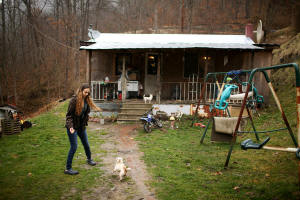
TWIN BRANCH, W.Va. — When people visit with friends and neighbors in southern West Virginia, where paved roads give way to dirt before winding steeply up wooded hollows, the talk is often of lives that never got off the ground.
Report urges US commitment to addressing impact of climate change on global food security
(June 13, 2014) US government action can curb the risks climate change poses to global food security, says a new report (PDF) released by The Chicago Council on Global Affairs.
Building on the recent Intergovernmental Panel on Climate change report and National Climate Assessment, The Chicago Council’s study explains how higher temperatures, changes in rainfall and natural disasters caused by climate change could undermine food production and put food supplies at risk. In total, climate change could reduce food production growth by 2 percent each decade for the rest of this century.
The report calls on the US government to integrate climate change adaptation into its global food security strategy. Recommendations include:
—Passing legislation for a long-term global food and nutrition security strategy.
—Increasing funding for agricultural research on climate change adaptation. Research priorities should include improving crop and livestock tolerance to higher temperatures and volatile weather, combating pests and disease and reducing food waste.
—Collecting better data and making information on weather more widely available to farmers. There are significant global data gaps right now on weather; water availability, quality and future requirements; crop performance; land use; and consumer preferences.
—Increasing funding for partnerships between US universities and universities and research institutions in low-income countries, to train the next generation of agricultural leaders.
—Advancing international action through urging that food security be addressed through the United Nations Framework Convention on Climate Change and the Post-2015 Sustainable Development Goals.
“As a global leader in agriculture, the United States should act now,” said Dan Glickman, former US Secretary of Agriculture and co-chair of the study. “It has much to gain by doing so: the continued productivity of the U.S. farm sector, strong international agricultural markets, more stable societies and demonstration of its national commitment to food and nutrition security for the world’s people.”
A bipartisan group of scientific, business, and policy leaders led by former Congressmen Glickman (D), and Doug Bereuter, president emeritus of The Asia Foundation (R), have endorsed the report’s recommendations. Gerald C. Nelson, a leading expert on climate change and food security, was the principal author.
“History has shown that with adequate resources and support, agriculture can meet growing production demands and adapt to some changes in climate,” said Bereuter. “But greater emphasis on adaptation must begin now.”
Without action, the effects of climate change could reduce global food production and availability, which puts US national security and economic interests at risk. Water shortages and agricultural degradation spurred by climate change increase the risk of civil unrest, according to the US Department of Defense and National Intelligence Council. Efforts to decrease the number of chronically hungry, which currently number more than 840 million people, could also be hampered. The US global food security strategy is strong, the study finds, because it focuses on small scale farmers in developing countries, whose productivity must be increased if the world is to raise food production by 60 percent by 2050.
But these efforts do not do enough to counteract the effects of climate change. “Since 2009 the US government has taken steps to confront these challenges through agricultural development,” said Ambassador Ivo H Daalder, president of The Chicago Council on Global Affairs. “For the first time since the Green Revolution, empowering the world’s poorest to improve their livelihoods is a high priority on the international agenda. But climate change puts the success of these efforts at risk.”
When not to go to school

KOLKATA, Apr 19 2014 (IPS) – In large parts of rural India, the absence of separate toilets for growing girls is taking a toll on their education. Many are unable to attend school during their menstrual cycle. According to the country’s Annual Status of Education Report in 2011, lack of access to toilets causes girls between 12 and 18 years of age to miss around five days of school every month, or around 50 school days every year.
Poor sanitation in India may affect well-fed children with malnutrition

SHEOHAR DISTRICT, India — He wore thick black eyeliner to ward off the evil eye, but Vivek, a tiny 1-year-old living in a village of mud huts and diminutive people, had nonetheless fallen victim to India’s great scourge of malnutrition.
Ugh. I miss it. Transitioning from military to civilian life and from camaraderie to isolation

ROCK SPRINGS, WYO. — The only light in the vast Wyoming darkness came from the lit end of another 5:30 a.m. cigarette as Derric Winters waited alone for sunrise on the porch of his trailer. He never slept well, not anymore, so he smoked and stared across the three miles of barren landscape that separated him from town. He checked his voice mail, but there were no messages. He logged on to Facebook, but no one was awake to chat. The only company now was the hum of the interstate behind his trailer, people on their way from one place to the next. He walked out to his truck and joined them.
USAID, partners target preventable deaths. New efforts unveiled to save millions of women, children
WASHINGTON, D.C. — The U.S. Agency for International Development (USAID) is realigning $2.9 billion of its resources to save up to half a million children from preventable deaths by the end of 2015. USAID Administrator Rajiv Shah said it is refocusing resources on high-impact programs with proven track records to save the most lives.
Fortified food—persuading the private sector to do good

With a certain amount of fanfare, Nigeria has just officially become a middle income country. It is not the sort of country associated with widespread hunger, or a country where people normally get, or expect to get, food aid. And yet around a quarter of small children in Nigeria are underweight, and around 40 percent are stunted; they do not get enough nutritious food to reach their full physical and mental potential.
Neonicotinoids: A reason millions of bees are dying
It was one of those mysteries no one cracked for years but gripped many: What’s killing all the bees? In Brevard County, Fla., nearly 12 million bees expired in 2011 in a great dying of almost biblical proportions. Then came news last year that 37 million bees — 37 million — had died that month at a Canadian beekeeping operation. That same month, Oregonians arrived at a Target to find 25,000 bumblebee corpses in the parking lot
