Asia

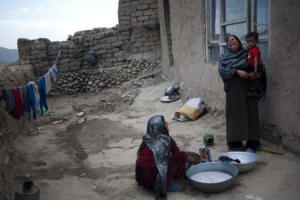
Three million Afghans face hunger as winter looms–aid groups

by Alertnet/Reuters December 14, 2011

See Report...

As Pakistan’s population soars, contraceptives remain a hard sell

by Karin Brulliard Washington Post December 14, 2011

Shazia Shahid, a community health educator, went to the tiny house to speak with the slight young woman about birth control. It was morning, a good time because the woman’s husband was out working. But the woman shrank behind a green veil — and b...

How fear drove world rice markets insane

by Dan Charles NPR November 2, 2011

Nothing is more basic and simple than food. Yet it comes to us courtesy of a long, complicated supply chain that spans the globe....

Food: Causes of high and fluctuating food prices

by IRIN News October 17, 2011

See Report...

Speculation on food commodities may harm the hungry

by Marilyn Geewax NPR October 16, 2011

Speculators in the agricultural commodities markets are forcing grocery prices to rise too quickly and erratically, according to some top economists marking World Food Day on Sunday....

The latest Demographic and Health Survey for Nepal shows that more than half of the children in remote rural areas are chronically malnourished, and most of them are girls. “Girls are neglected because they are thought not to need strength,” Indra Raj Panta, programme officer for Decentralized Action for Children and Women in Jumla, told IRIN.  Photo: Natalie Bailey/IRIN

Nepal: Gender discrimination fuels malnutrition

by IRIN News September 22, 2011

Gender discrimination lies behind much of the malnutrition found in under-five children in Nepal, say locals and experts. ...

  • World Hunger Education
    Service
    P.O. Box 29015
    Washington, D.C. 20017
  • For the past 50 years, since its founding in 1976, the mission of World Hunger Education Service is to undertake programs, including Hunger Notes, that
    • Educate the general public and target groups about the extent and causes of hunger and malnutrition in the United States and the world
    • Advance comprehension which integrates ethical, religious, social, economic, political, and scientific perspectives on the world food problem
    • Facilitate communication and networking among those who are working for solutions
    • Promote individual and collective commitments to sustainable hunger solutions.