



Roundtable Meeting NGOs’ the Duty of Care for National Staff
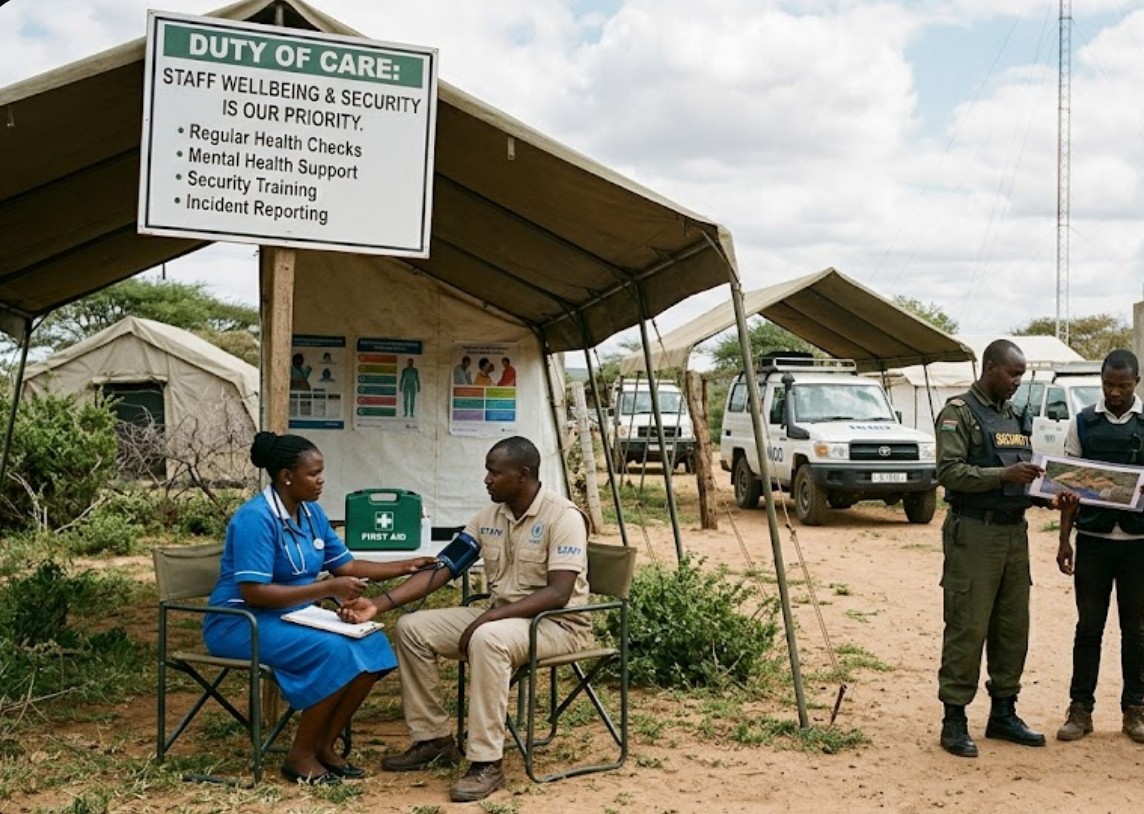
May 9, 2026 Increasingly aid agencies have argued for more decision- making, resources and active roles for “local”, or national, actors in aid programs, including food, nutrition and other development and humanitarian efforts. At the same time, aid agencies have taken efforts to provide balanced “duty of care” (DoC) for local employees, partners, volunteers and their families during disasters. But best practice standards remain unclear and there are many challenges, if not barriers, to achieving the goals of DoC across security, training, psychosocial care, rest and relaxation, legal support, relocation and other dimensions.
On March 13, World Hunger Education serivce (publisher of this online educational platform, “Hunger Notes”) partnered with Compassion International and George Washington University in hosting a roundtable of experts from two dozen aid agencies, for a two-hour open discussion to share lessons about DoC.
A central concern was the persistent gap between policy and practice. Local staff often work in dangerous environments, carry the “double burden” of being both responders and affected community members, and have limited access to evacuation, psychosocial support, family assistance, and equitable medical care. Participants also noted that security, HR, and wellness systems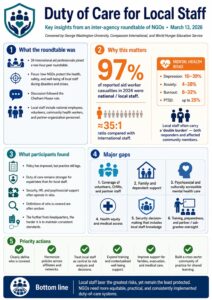 remain siloed within organizational systems and responsibilities, weakening crisis response.
One participant said, “In disasters national staff deployed away from home are exposed to crisis contexts and deserve the same evacuation protections as international staff.”
The roundtable highlighted additional problems in federated NGO structures and sub-granting systems, where responsibility for partner staff is often unclear. Family support, remote work options during conflict, and coverage for indirect workers remain underdeveloped. At the same time, participants cited emerging improvements: more donor attention, growing mental health awareness, contextualized well-being frameworks, and some stronger onboarding and training models.
“Framing duty of care as mission-driven (not compliance- or HR-driven) is the key to getting executive support.”
Overall, the meeting concluded that NGOs need clearer definitions of who is covered, more equitable protections for local staff, harmonized policies, better training, and a stronger cross-sector community of practice.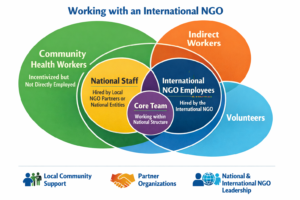
See this downloadable below:
-
 World Hunger Education
Service
P.O. Box 29015
Washington, D.C. 20017 -