


Neglected Crisis in The Central African Republic
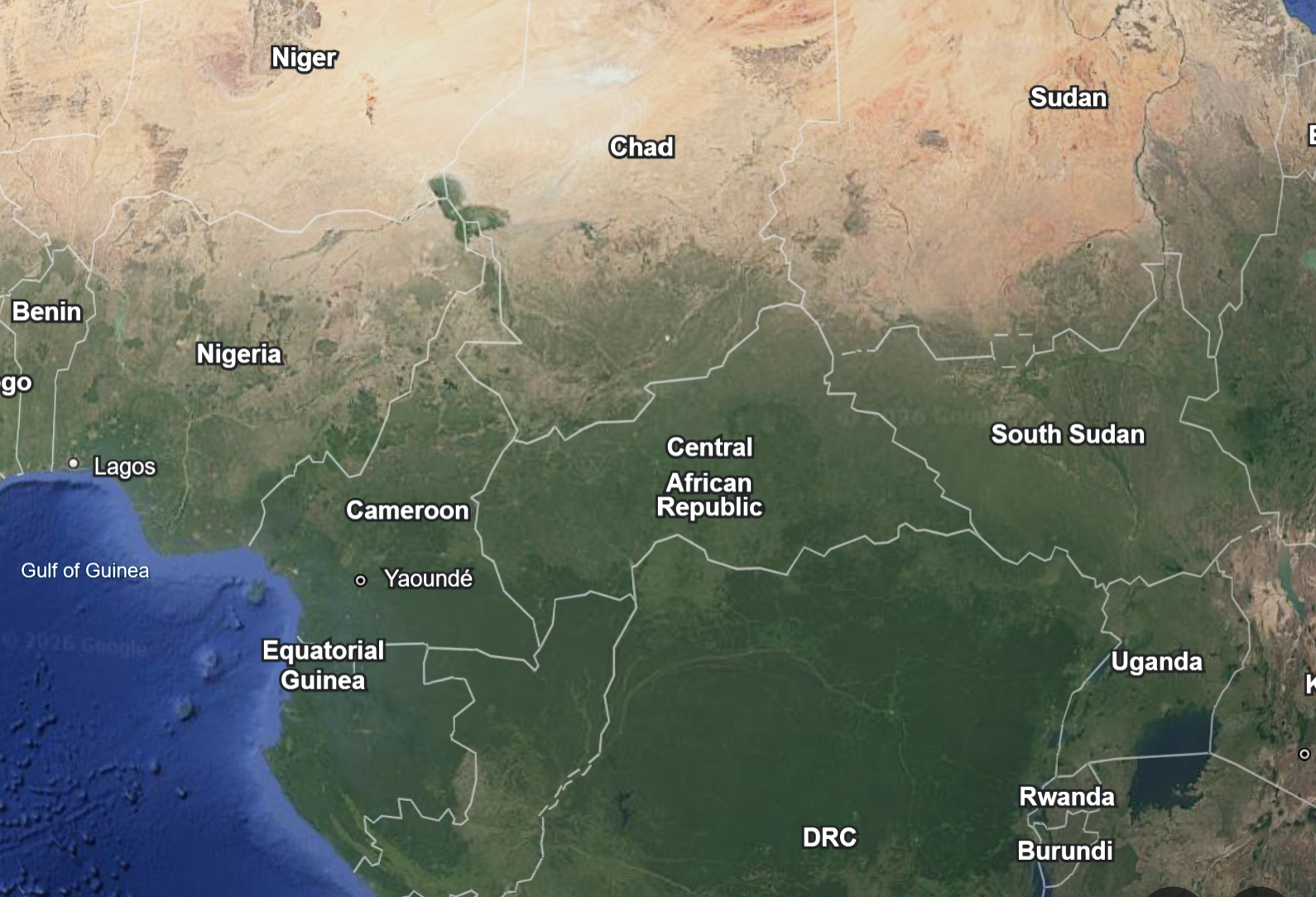
September 30, 2026 The Central African Republic, CAR, has been in crisis for many years due to conflict, high mortality and increasing food insecurity. Independent UN analysis has estimated that just over 2 million people, nearly one-third of the population, were in food Crisis or worse (IPC 3+), including about 262,000 in Emergency (IPC 4). The UN estimates more than 62,000 vulnerable people received food or cash assistance in August, while over 11,500 internally displaced people in Am-Dafock gained improved access to safe drinking water.
The following review about Extreme Food Insecurity in CAR was contributed by Augustin Gang Karume (of Rebuild Hope for Africa, Jennifer OKeeffe (of Johns Hopkins University), and Les Roberts (of Columbia University).
Our findings add to the many indicators that there are near famine-like conditions in CAR, particularly in the half of the country outside of Government control, and that this has become worse since 2020. Households reported that 97.0% of adults and 92.7% of children had reduced their meals since the crisis. Of these, 82.3% of adults and 70.8% of children were reportedly eating one meal or less a day. More than two thirds of households did not have resources to sustain them for more than two weeks. There is a dearth of children less than 3 years of age and child mortality in non-GC areas is well above the famine threshold (Gang et al., 2023).
External factors have only exacerbated the crisis. During the pandemic, global prices surged for imported fuel and fertilizers reducing agricultural inputs in 2022, leading to lower crop yields, especially among small farmers (Food and Agricultural Organization of the United Nations, 2022). Cameroon, a critical economic partner for CAR, banned certain food exports further decreasing market availability and increasing prices (Famine Early Warning Systems Network). Like the rest of the world, in efforts to protect population health, the Government of CAR imposed restrictions on movements inside and outside of its borders, resulting in serious negative household economic impact.
Government-supported (Russian mercentary) Wagner forces have drastically escalated violence in CAR. Since their arrival, they have executed a “campaign of terror”, inflicting human rights abuses such as systematic rape, torture, and mass killings, including targeted murders based on ethnicity(The Sentry, 2023, June). Following this campaign, attacks on civilians by local rebel groups have increased, as Wagner presence has posed a clear threat to their survival (United Nations Secretary-General, 2023). The UN reported in 2023 that 56% of Central Africans, or 3.4 million people, required humanitarian aid, with one in five displaced. Field reports during data collection revealed civilians abandoning their fields due to fears of attack, rape, or murder. Many relied on small home gardens as their sole source of food. Households in the Central African Republic have been forced to make difficult choices, such as eating less nutritious foods or reducing calorie intake. Manioc, the main food staple in CAR, is notably deficient in nutritional value. The fact that most households reported an absence of more nutrient-rich foods, such as animal proteins, fruits, and vegetables indicate the pervasiveness of malnutrition risk. Children, particularly those under five, face growth and developmental issues, and frequent illnesses due to compromised immunity (Bourke et al., 2016; Ricciuti, 1981). For adults to engage in farming or labor, they require physical well-being achieved through sufficient calorie intake and nutrient-rich meals.
In the context of food shortages, negative coping strategies may have detrimental effects on both physical and mental health, sometimes more so than the lack of food itself. The practice of borrowing food, rooted in African solidarity and strong family networks, can lead to conflict if the lending family is unable to reclaim their resources when needed. This becomes particularly problematic when many households face food insecurity, which could exacerbate vulnerability across entire communities. Selling assets, a common but unsustainable solution, impedes future recovery, as does reliance on expensive purchased items. The reported level of food insecurity suggests that sudden disasters, like droughts or floods, could escalate nutrition-related illness and death. Additionally, any change in household composition, such as a birth or death, could further threaten food security.
CAR is experiencing one of the world’s most severe food crises, a situation that humanitarian organizations have been warning about for over two decades. Recent assessments indicate that in CAR, 298,000 children under five and 140,600 pregnant and lactating women suffer from acute malnutrition.
Furthermore, it is reported that an additional 40% or 395,000 children under five are chronically malnourished (UN OCHA, 2022a). Recent mortality estimates suggest that the UN and other organizations may be significantly underestimating mortality rates in CAR. The authors of this paper argue that the “famine- level” mortality observed in non-GC areas corresponds with the food shortages reported here but does not align with previous malnutrition estimates. This discrepancy raises questions about whether UN malnutrition estimates have also been underestimated or if CAR’s situation is unique due to factors such as lack of access to fertile land, extreme stress from the Government-Wagner military campaign, and high infectious disease risks. The fact that previous findings show a dearth of young children combined with an under-5 mortality rate only 40% higher than the crude mortality rate, makes this question more difficult to answer.
Looking at the humanitarian response in CAR raises further questions. In 2022, food security was the only cluster other than coordination to meet 100% of its funding needs. Indeed, it exceeded its goal by 26% for a total of 205.8 million USD dedicated to addressing food insecurity in CAR (UN OCHA, 2023). Yet, only 17 of the 70 clusters reported receiving food aid, and these were disproportionately in more insecure areas, to the credit of WFP and ACF, the main reported providers. That said, the majority of the neediest communities, and 82% of households reportedly received no aid. There must be ways to better support delivery of aid to areas that need it the most. In contrast to the food security cluster, the related nutrition and water, sanitation, and hygiene (WASH) clusters only received 42% and 43% of requested funds respectively. This gap suggests major shortcomings in the ability of the humanitarian community to adequately respond to the multi-faceted crisis in CAR.
The findings here underscore the pressing need for comprehensive and sustainable interventions to improve food security in CAR, particularly in the more insecure areas. Ongoing conflict, population displacement, abandonment of fields, reduction in arable land, and lack of access to seeds and tools, all contribute to the challenges that households in CAR face.
Insufficient nutrition and calorie-intake perpetuate a vicious cycle, whereby a household’s ability to acquire food is inhibited by its scarcity. To break the cycle, alternative strategies are needed. Food security is not likely to improve on its own in the near future. The need for food aid that reaches households quickly and meets nutritional needs is as pronounced as it has ever been. By delivering this aid, the humanitarian community can show that the life of an individual living in CAR is worth exactly the same as the life of a person living in other crises (Jarrett & Checchi, 2023).
Recommendations
To meet the immediate needs of the population, emergency food assistance is necessary and will require a mix of direct food distribution with cash transfers and/or vouchers. With low agricultural outputs in past years, market assessments are needed to determine whether cash vouchers and coupons will allow households to procure enough food to meet their nutritional needs. In areas where the yield is low and market prices high, food rations should be distributed instead. Rations should include high protein items such as fortified biscuits and ready-to-use therapeutic foods, addressing both the urgent food demand and the fact that the primary staple, manioc, and manioc leaves, provide limited caloric and nutritional value.
To prevent imminent loss of life and health, a successful aid package would combine expansion of nutrition and WASH interventions to address the acute needs of vulnerable groups such as children <5, pregnant and lactating women, and the elderly. Knowledge, attitude, and practice (KAP) campaigns could be conducted to provide households with information on dietary diversity and encourage them to adopt diverse and nutrient-rich diets from locally available food items, keeping in mind that the many geopolitical, environmental, and social factors outside of households’ control mean that mere KAP campaigns will not be sufficient.
Agricultural support will help households recover from food insecurity and become self-sufficient in the long-term. Training and distributions of seeds and tools will contribute to agricultural production. Specifically, training on best farming practices and sustainable agriculture will increase output and assure fields will bear future harvests without harm to the environment. “Mixed Farming” systems, which include animal husbandry, reduce risks, and have been shown to have higher production than crop farming alone(Food and Agricultural Organization of the United Nations). Livestock have the potential to be transformative, enabling households to pay for health care, education, and other benefits to life and well-being.
-
 World Hunger Education
Service
P.O. Box 29015
Washington, D.C. 20017 -