



Classic Publication from 1995: Bittersweet Harvests, by Ann Thrupp
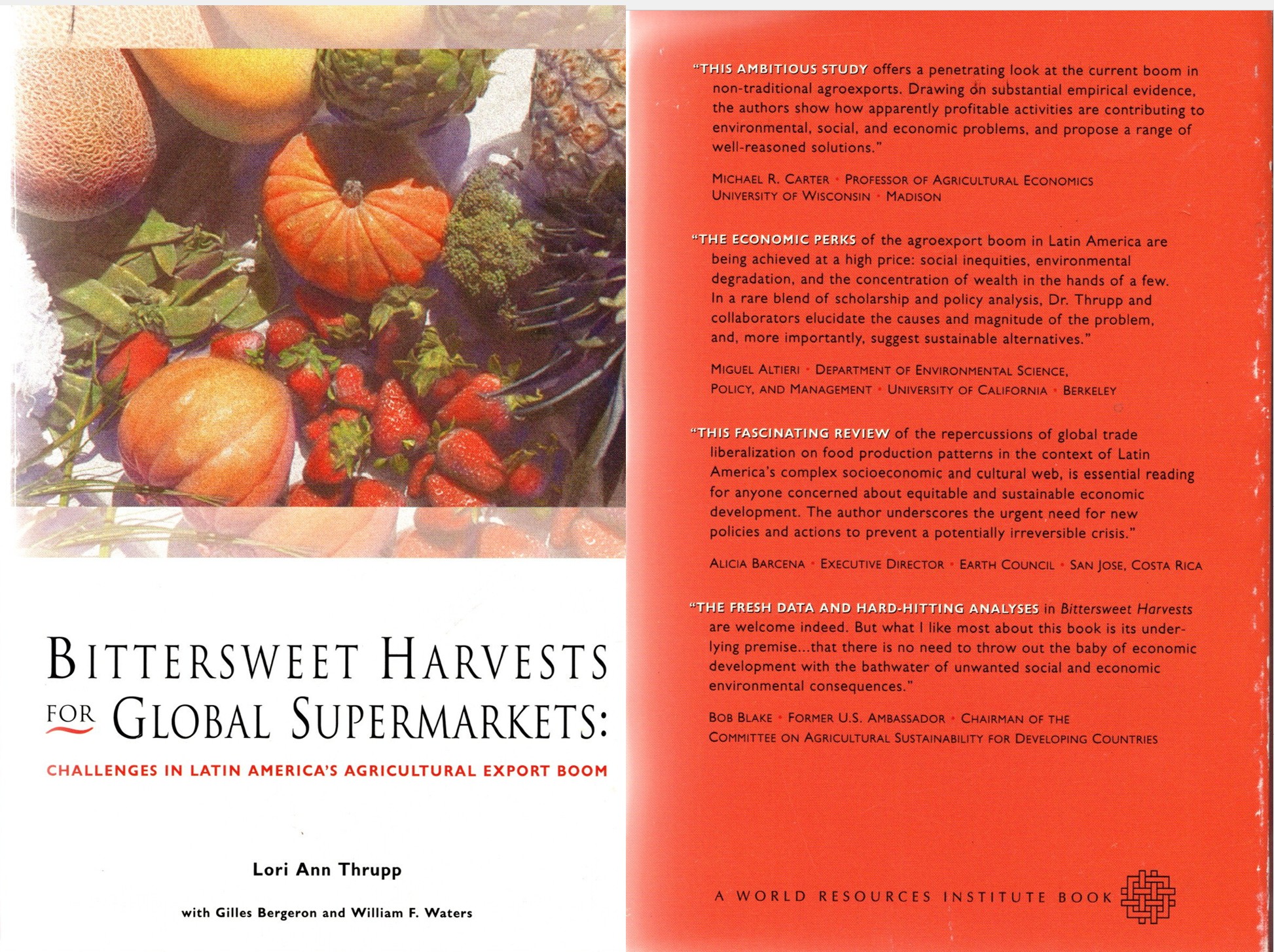
A classic publication about food insecurity that is still worth a read today to understand how aid has developed in Latin America is “Bittersweet Harvests for Global Supermarkets: Challenges in Latin America’s Agricultural Export Boom” from 1995 by Lori Ann Thrupp, Gilles Bergeron, and William F. Waters Published: published by the World Resources Institute in Washington, D.C.
The authors give background about how the USG focused aid in the Central America region at the time toward export promotion of food products. Yet, a central lesson in it is that hunger and malnutrition can worsen even during increased agricultural production.
Much of the text addresses non-traditional agricultural products (NTAEs) such as vegetables, flowers and nuts, as opposed to coffee, bananas, cotton and sugarcane. Underlying the regional boom in NTAE exports were national and donor policies. These crops generate a lot of jobs and a large proportion are women.
Agricultural exports do not automatically translate into improved food security for local populations. Research cited in the book showed that despite gains in income and agricultural productivity from non-traditional export crop adoption, there were “no visible positive effects on nutrition” among farming households. The authors present a balanced analysis, highlighting both the “sweet” benefits—such as billions in revenue, hundreds of thousands of jobs, and year-round availability of exotic produce in global markets—and the “bitter” drawbacks, including economic volatility, environmental degradation, and social inequities. Drawing on empirical research, interviews with farmers, workers, and policymakers, and case studies, the book argues for more sustainable and equitable approaches to agroexport policies to prevent long-term harm.
Latin America’s export boom prioritized cash crops for international markets over staple foods for domestic consumption. This can lead to food dependency” where producing countries import basic grains while exporting high-value items, driving up local food prices and reducing access for vulnerable populations. In 2025, this dynamic persists in Latin America and other regions, contributing to food insecurity amid rising global demand for fresh produce.
The authors call for direct action for poor farmers to overcome marketing barriers. They note the gaps in understanding of market conditions.
Strategic recommendations at the end include: “promote participatory approaches, including poorer farmers in decision-making;” “promote sustainable agricultural technologies and practices, including integrated pest management, organic practices and crop diversification;” and “balance policy attention … on alleviating hunger and fulfilling local food security needs.”
-
 World Hunger Education
Service
P.O. Box 29015
Washington, D.C. 20017 -