



Somalia has had no functioning government since January 1991, when former President Siyad Barre was ousted.
Since then, fighting between warlords, government forces and various alliances of Islamist insurgents has resulted in the deaths of thousands of Somalis and displaced hundreds of thousands more.
Author: WHES
Running out of water in northern Kenya: Amenia Abdalla waits in line six hours for 25 gallons of water which is expected to last 10 days for her family of eight

Amina Abdalla, a 45-year-old mother of seven, lives in northern Kenya’s Marsabit District, where life is a daily struggle for scarce water and pasture.
Abdalla’s family lives on about 10 litres of water per day, far below the 20-50 litres per person per day recommended by the UN. She told IRIN/PlusNews about her daily struggle for water:
Fall in funding raises question mark over future of global fight against Aids: International financing for HIV programs in developing nations worldwide has fallen 10% (opinion)
International funding for Aids programmes in developing countries across the world dropped by 10% in 2010, according to a new report, raising concern that funding for the global fight against HIV and Aids may be on a long-term downward trend.
Afghan widows form community on Kabul hill
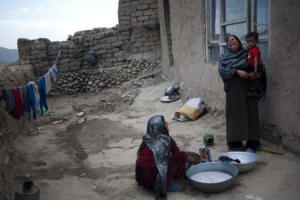
The hills of this capital stand as monuments to men in battle, topped by crumbling forts and rusted tanks, ancient ramparts and gleaming tombs of kings. One is different but no less a testament to war. It is known as Tapaye Zanabad — the hill that women built.
Somalia’s humanitarian crisis worsened by violations of laws of war, says report
The warring parties in Somalia should ease rather than thwart the humanitarian effort to deal with drought and famine, a human rights group said on Monday.
Human Rights Watch accused all sides involved in the 20-year conflict of contributing to Somalia’s humanitarian catastrophe by committing serious violations of the laws of war.
Indigenous Bolivians march against Amazon road through their homeland, a pristine forest reserve
Hundreds of Amazonian Indians in Bolivia have begun a long march in protest at the construction of a road through a pristine rainforest reserve.
East Africa: Tough lifestyle changes as food prices continue to rise
See Report
Pakistan: Hunger stalks millions as food insecurity grows. The cause is the rise in food prices combined with extreme poverty; food is available, but poor people can’t afford enough of it to avoid hunger. Almost half of the population is food insecure, according to the best estimate.
Saleem-ud-Din, 35, is happy today. The disabled beggar has been able to buy some cooked lentils as well as six ‘rotis’ [flat bread] for his family of six. “Today we will have a feast. Usually we share two or three ‘rotis’, at best, between us – but someone put a Rs.100 [US$1.17] note in my bowl, and along with the other smaller notes and coins, it is enough to buy a proper meal,” Saleem told IRIN in Pakistan’s eastern city of Lahore.
A special child (opinion)
August 3, 2011
Demographers tell us that sometime in September or October, probably in Central India, a very special child will be born. The exact time and place will never be precisely known, and this Special Child’s first tiny cry will not heard beyond a hut or a village, but the event will be momentous – she will be the Seventh Billion Person in the world.
When this event happens, we here in the United States will be busy with our families, our jobs, our thoughts and opinions, our religious beliefs, and all of the factors that contribute to our daily lives and livelihoods. There may be some media news items about seven billion people now on our planet, but it will be of passing interest for most of us. That is tragic, because the birth of the Special Child should be a stark reminder of why our daily concerns are so closely linked to a rapidly expanding world.
Here in the United States we are already aware of some of the effects of massive world population growth, such as the need for increases in food production or how quickly a new disease can spread. We have even experienced some passing initial involvement with these concerns, such as higher food prices and worries about flu epidemics.
But for the countries and regions most affected by huge population increases, a “scarcity mentality” may begin to prevail, with the potential for internal strife and a coveting of what others have. For those less affected, like the United States, a “siege mentality” could be the result, with increased immigration barriers, a restrictive international trading climate, and continued internal polarization of political, economic and social beliefs.
These conditions are not as remote as we might think. Indeed, the Special Child’s birth reminds us that with seven billion human beings, we are never far from the rest of the world. We know that global financial and market conditions affect our personal savings and daily costs. We also know all too well, the tragic costs of war, when competing interests and beliefs, fueled by population growth, result in military and terrorist attacks, counter attacks and a spiraling escalation of hatred and distrust.
We urgently need to renew a lost focus on the challenges and consequences of continued world population growth. But at this time, here in the United States, we seem incapable of seeing the future beyond short term political and philosophical differences. The recent crisis of debt and deficit is a good example, and famine in Africa seems far away. Indeed, we appear to have devolved to a social and political mindset that seemingly prizes partisan political power; that appears to idolize intransience in ideology; that conveniently consents to corporate control, and seems to revel in a rigidity in religion that can contradict the concept of a loving God.
This is not the way to face the challenges of the Special Child and her daughters and granddaughters, not with our leadership and our own national security at stake. As a nation, we need to develop policies and actions to contend with a rapidly expanding world, or that world may be our downfall. There are many potential answers at hand; we know the positive factors that contribute to lower birth rates and consequent world stability, such as improved health and nutrition, and these can be addressed without intruding on personal values and beliefs. But national direction on this and other major issues must come forcefully from all of us to our leadership, and on this subject and many others, we must find a way to get along and find common ground.
We face a future of too many people and we must face it together. If not, the birth of the Special Child will portend a world of scarcity, insecurity, and strife – and we and our children will not be immune.
Shaughnessy is former Chairman of the Board of World Hunger Education Service
Disclaimer: The contents of this opinion editorial do not necessarily represent the views of the WHES board.
Somali famine spreads to three more areas, says UN
Three new areas of Somalia have been classified as having been hit by famine, the UN says.
It declared a famine in two large southern regions of the war-torn country in July.
