



World Bank President Seeks Funds for Crisis Response
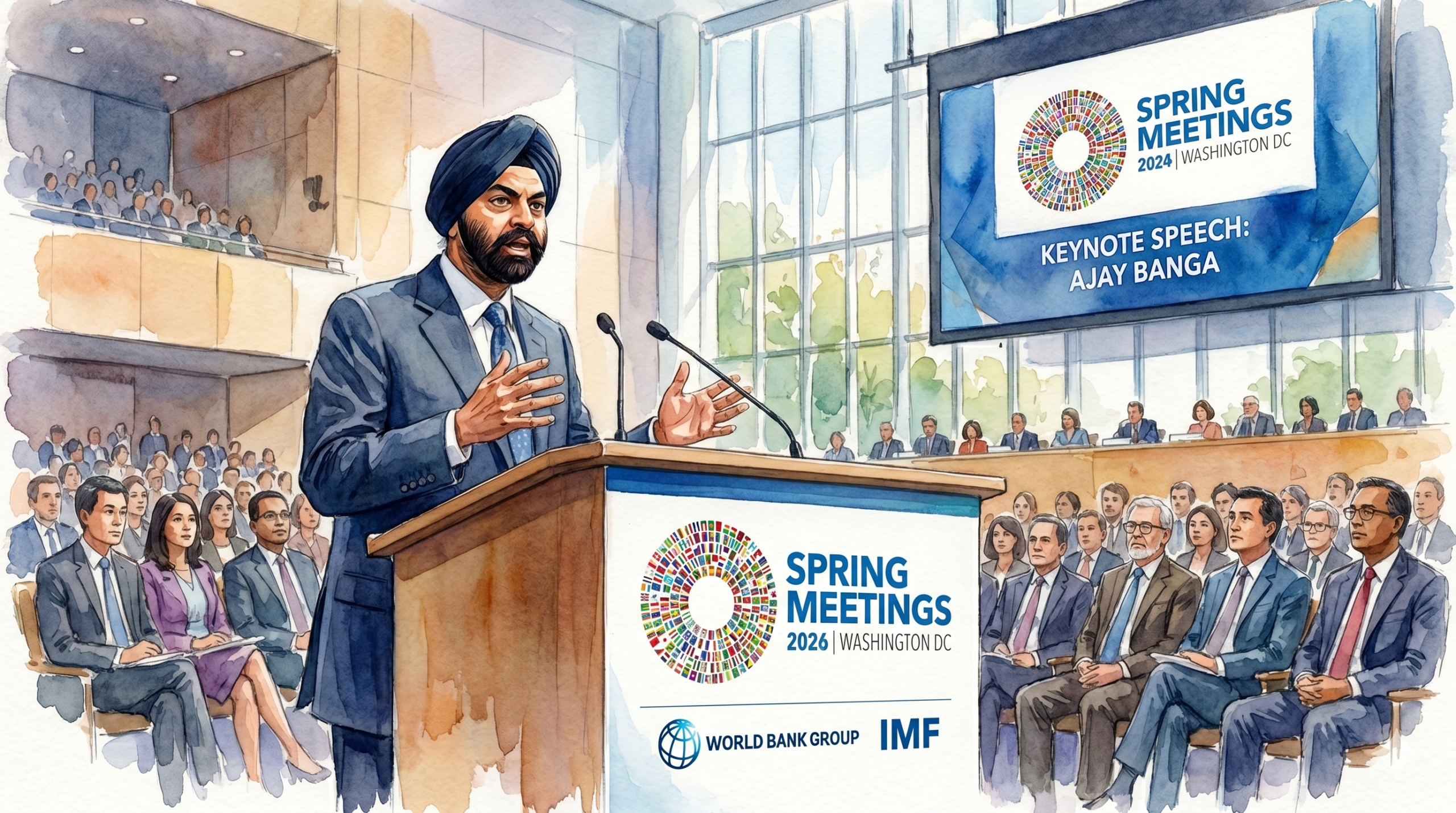
April 24, 2026 At the annual World Bank/IMF annual meeting held April 13–18, 2026, remarks and speeches by the World Bank President, Ajay Banga, addressed the current crises in the world affecting agriculture, fertilizer and increased risks to lower income countries. Banga announced that the World Bank is preparing to mobilize $80 billion to $100 billion in funding over the next 15 months to support countries harmed by the US/Iran war, particularly those facing high energy prices and supply chain disruptions.
He explained that $20 billion to $25 billion could be made available immediately through existing “crisis response windows” without requiring new approvals. He warned that the US/Iran conflict could reduce global GDP growth by to over 1 percentage, depending on its duration, and advised leaders to prioritize reining in inflation in the short term before tackling long-term economic growth.
He framed his comments around ““multiple overlapping global shocks” (war, debt, inflation, supply chains). These shocks were repeatedly linked to rising food and fuel costs. Broader discussions around the meetings warned that tens of millions could fall into food insecurity amid ongoing crises
More generally, Banga emphasized job growth to help address poverty and hunger. He emphasized that 1.2 billion young people in lower income countries will enter the workforce over the next decade, but current projections suggest only 400 million jobs will be created, creating a massive 800 million job gap.
The World Bank is responding to how the conflict risks driving a record number of people into acute food insecurity, potentially adding 45 million more individuals to the 318 million already facing severe hunger globally if the conflict persists beyond mid-2026.
On other topics, Banga praised India’s digital t ransformation, citing examples of women farmers using “Small AI” to identify crop diseases, and expressed a desire to scale this technology in emerging markets.
He also highlighted the launch of the World Bank’s new “Water Forward,” a global initiative to improve water security for a billion people by 2030, noting that water is foundational to economic growth and jobs.
Videos:
Jobs: https://www.youtube.com/watch?v=IeyO7U0_byY
Crisis response toolkit: https://www.youtube.com/shorts/4bWFDBKWpyY
As impacts of Middle East conflict ripple through global markets, countries need fast, practical support. @WorldBankGroup’s Crisis Toolkit helps governments respond quickly, manage shocks, and stabilize economies. https://t.co/GaS1pOrfXX #WBGMeetings pic.twitter.com/jloXCMgaxk
— World Bank Group (@WorldBankGroup) April 17, 2026
Readings:
-
 World Hunger Education
Service
P.O. Box 29015
Washington, D.C. 20017 -