



BEIRUT — The fighting in Yemen threatens to cause widespread hunger and thirst and displace huge numbers of people, creating another humanitarian disaster in a region already reeling from the crisis in Syria, according to analysts and aid workers
Year: 2015
Beneath California crops, groundwater crisis grows

Even as the worst drought in decades ravages California, and its cities face mandatory cuts in water use, millions of pounds of thirsty crops like oranges, tomatoes and almonds continue to stream out of the state and onto the nation’s grocery shelves.
Overpopulation, overconsumption—in pictures. How do you raise awareness about population explosion? One group thought that the simplest way would be to show people.

See Report
House legislation supporting USAID Feed the Future program introduced by Rep. Chris Smith
March 30, 2015) On March 24, Rep. Chris Smith introduced the Global Food Security Act of 2015 (H.R 1567), legislation supporting the U.S. government global hunger and food security initiative, Feed the Future (FtF).
The bill’s purpose is “To authorize a comprehensive, strategic approach for United States foreign assistance to developing countries to reduce global poverty and hunger, achieve food security and improved nutrition, promote inclusive, sustainable agricultural-led economic growth, improve nutritional outcomes, especially for women and children, build resilience among vulnerable populations, and for other purposes.”
The bill currently has 12 cosponsors. Its legislative progress can be followed by going to the Congressional legislative database Thomas and typing in the bill number H.R.1567 into the search box there (making sure the bill number button is selected).
In another FtF development, Oxfam America released a report Promise and Potential: Delivering inclusive, sustainable development for small-scale food producers through the Feed the Future Initiative (44 page PDF).
Oxfam America examined FtF activities in six countries: Ethiopia, Ghana, Guatemala, Haiti, Senegal, and Tanzania. Among the report’s findings:
The case studies point to substantial, real, and important improvements in the way the US government, especially the US Agency for International Development (USAID), delivers assistance. FtF has made significant efforts to incorporate and adhere to principles of aid effectiveness.
The initiative is also making real efforts to integrate key issues such as women’s empowerment and natural resource management across FtF activities.
The bulk of bilateral assistance provided through FtF is allocated to programs that emphasize increased production and productivity of crops and engagement of small-scale producers in formal value chains. This approach has important implications; small-scale producers are in the best position to take advantage of the resources and support offered through these projects. However, the case studies revealed that FtF projects tend to most benefit producers who already have the resources, capacity, and relationships to take advantage of new market opportunities.
UNICEF warns lack of toilets in Pakistan tied to stunting
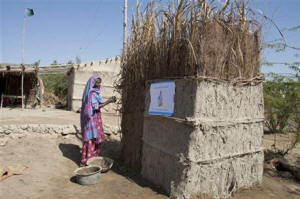
ISLAMABAD (AP) — More than 40 million people in Pakistan do not have access to a toilet, forcing them to defecate in the open, which in turn is a major contributor to stunting in the country, a top UNICEF official said.”There are 41 million people who do not have access to a toilet in Pakistan and as a result they are defecating in the open. And open defecation has significant health and nutritional consequences,” said Geeta Rao Gupta, deputy executive director at UNICEF. She recently spoke to The Associated Press during a trip to Pakistan to draw attention to the problem.
After the story is published, a minimum wage worker loses her job for talking to the Washington Post
Shanna Tippen was another hourly worker at the bottom of the nation’s economy, looking forward to a 25-cent bump in the Arkansas minimum wage that would make it easier for her to buy diapers for her grandson. When I wrote about her in The Post last month, she said the minimum wage hike would bring her a bit of financial relief, but it wouldn’t lift her above the poverty line.
The great land giveaway in Mozambique
Introduced myself to Luis Sitoe, economic adviser to Mozambique’s minister of agriculture, and explained that I’d spent the last two weeks in his country researching the ProSAVANA project, decried as the largest land grab in Africa. This ambitious Brazil-Japan-Mozambique development project was slated to turn 35 million hectares (over 85 million acres) of Mozambique’s supposedly unoccupied savannah lands into industrial-scale soybean farms modeled on—and with capital from—Brazil’s savannah lands in its own southern Cerrado region.
Weed killer, long cleared, is doubted
Thirty years ago, an Environmental Protection Agency committee determined that the popular weed killer Roundup might cause cancer. Six years later, in 1991, the agency reversed itself after re-evaluating the mouse study that had been the basis for the original conclusion.
Environmental group sues E.P.A. over Monarch butterfly demise
See Report
Ebola took away her family, home and job: Now she’s trying to start over

After losing 29 relatives, Josephine Dolley took in six orphans and is determined to provide for them despite Liberia’s economic crisis. Dolley, left, speaks with one of her adopted children. Photo: W. Leaming/Washington Post
