 |
 |
|
|
| DEPARTMENTS | |||

|
|||

|
|||

|
|||

|
|||

|
|||

|
|||

|
|||
| YOU CAN!... | |||
|
|||

|
|||
|
|||
|
|||
| MORE ABOUT HUNGER NOTES |
|||
 |
|||

|
|||

|
|||
|
|||
|
|||
|


Development Education: Can We Understand the World Together?
(August 1999) Development education is the focus of this issue of Hunger Notes, and the articles that follow will give you, the reader, several tastes of what "dev ed" is all about. I say "several tastes" because the authors look at the topic from a variety of angles. If you sample them all, you'll get a relatively complete meal, but each is worth chewing on by itself.
|
We begin with my own overview giving a brief history of the development education movement in the United States and reaching the sobering conclusion that development education is in trouble in this country. But then there immediately follows the article by Paula Hirschoff pointing out that all is not lost and that three new initiatives are under way that offer promise for the future.
The next four contributions look at development education of various kinds. Anne Baker and Jennifer Munro both deal with development education within the formal education system, Baker largely at the K-12 level, Munro in higher education. Each suggests that while "development education" as a term may not appear in the curricula, it is in fact going on in many guises.
Sara Forster, Corcoran High School student, teaching 2nd graders at Roberts School about the village and culture of Dia, Sierra Leone. The Corcoran/Roberts Peace Corps Partnership Project funded construction of a primary school for the villagers. Annually, since 1983 the Corcoran students have undertaken a Peace Corps Partnership Project. To date they have raised over $85,000 for 16 projects. |

The article by Juliette Schindler reports on a specific development education project aimed at business and labor. This project typifies the kind of project that the USAID Biden-Pell Program has supported. Over the years AID has provided funds for projects aimed at many different target audiences-- educators, librarians, farmers, members of the YWCA, and many, many others. On each of these, a similar account could have been written.
Sara Grusky's article is even more sharply focused as she examines how service abroad by young Americans can be a highly educational experience. It thereby illustrates the multiplicity of ways in which development education can take place.
The last two articles turn away from the U.S. scene to tell us about dev ed in other countries. Again, they are only samples of stories that could be told of many countries. Francois Legault provides a thorough overview of the Canadian experience over the past 10 years. Lillian Strand, by contrast, gives us a detailed account of one particularly exciting project in Norway (which in fact is now being copied in the United States).
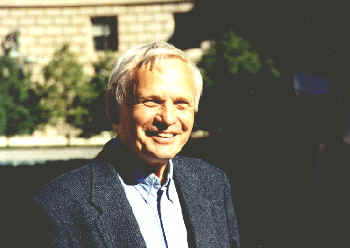
Andrew Rice has devoted most of his professional life to international cooperation for economic and social development, with particular attention to the engagement of civil society and to the importance of public understanding in the United States of the U.S. stake in worldwide sustainable human development. He was one of the founders of the Society for International Development, an international professional organization of which he was executive officer for nearly 20 years. He also was a founder of the International Development Conference, a U.S. educational coalition on development issues of which he has been President and Chair and now is Chair Emeritus. For the past 12 years he has edited IDC's quarterly newsletter, Ideas & Information about Development Education.
|
What is Development Education? What is development education? This question has been debated for many years. There is no agreed upon answer. But many efforts have been made to define it. The reader may be interested in comparing some of them. In the article "Is There a Future for Development Education in the United States?", for example, there appears a definition agreed to by many U.S. non-governmental organizations in 1984. The article on development education in Canada contains a 1990 definition offered by an official government committee in that country. We include here two other current definitions. The first comes from the United Kingdom and was issued by that country's Development Education Association: Development education's concern is ultimately for the dignity and worth of every human being, recognizing each individual's role in society and the interrelationship with the global environment. Development education recognizes the need of the poor, oppressed and marginalized to be empowered and to choose their own path of development. Development education seeks to celebrate what we have in common with our fellow human beings, in our rich diversity of cultures and traditions. Development education wishes to enable people from the North and South to enter into a relationship based on solidarity, dialogue and partnership where each is willing to listen, to receive and give in an appropriate way. Development education acknowledges the role of education as a life-long process of enabling people to change limiting perspectives, oppressive structures and the lifestyles which depend on them. And from the Development Education Society of Japan: Development education is an educational activity that stimulates us all as individuals to understand the various issues involved in development, that causes us to reflect on what development should be, and that fosters the attitudes and abilities that make it possible to participate vigorously in activities aimed at bringing about a fair global society in which we can all live together. To these ends, it should put the following guidelines into practice:
|
|
Ideas and Information about Development Education It's easy to keep up-to-date on what's going on in the field of development education. All you have to do is read the quarterly newsletter, Ideas and Information about Development Education, the only regular publication in the United States which deals exclusively with this topic. Published by the International Development Conference, it is available for $12 a year ($22 for two years) from IDC, Suite 720, 1875 Connecticut Ave., N.W., Washington, DC 20009-5728, phone 202-884-8580, fax 202-884-8499, e-mail idc@idc.org. A sample copy will be gladly sent upon request. |
copyright