 |
 |
|
|
| DEPARTMENTS | |||

|
|||

|
|||

|
|||

|
|||

|
|||

|
|||

|
|||
| YOU CAN!... | |||
|
|||

|
|||
|
|||
|
|||
| MORE ABOUT HUNGER NOTES |
|||
 |
|||

|
|||

|
|||
|
|||
|
|||
|


Study shows Congo's neglected crisis leaves 5.4 million dead
International Rescue Committee
(January 25, 2008) Conflict and humanitarian crisis in the Democratic Republic of Congo have taken the lives of an estimated 5.4 million people since 1998 and continue to leave as many as 45,000 dead every month, according to a major mortality survey just released by the International Rescue Committee.
“The conflict and its aftermath, in terms of fatalities, surpass any other since World War II,” says the aid group’s president, George Rupp. “Congo’s loss is equivalent to the entire population of Denmark or the state of Colorado perishing within a decade. Although Congo’s war formally ended five years ago, ongoing strife and poverty continue to take a staggering toll. We hope this week’s peace agreement in North Kivu will mean an end to the hostilities and a restart of reconciliation and recovery efforts.”
The latest mortality survey was conducted last year by the International Rescue Committee and the Burnet Institute and covers the period of January 2006 through April 2007. Researchers visited 14,000 households in 35 districts of Congo’s 11 provinces. The final toll combines figures from four previous IRC mortality surveys with data from the newest study.
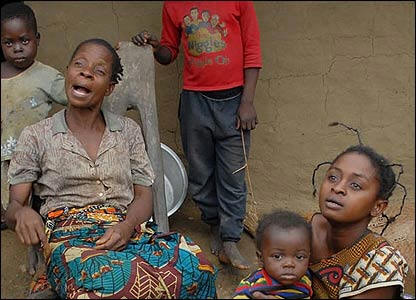
"We have lost four children in four months to
fever," says Therese Tchausi (seated). Local health official
Merveille Njolombe says malnutrition is a big problem in
villages like Misoke. "We also see a lot of malaria,
bilharzia and intestinal worms." Some 727,000 people died in
excess of normal mortality between January 2006 and April
2007 and nearly half of these were among children under the
age of five. "Life here is difficult, we live like dogs,"
says Bilenda Francois. Photo: BBC
The survey found that mortality remains highly elevated across the country.
“Since our last study in 2004, there’s been no change in the national rate, which is nearly 60 percent higher than the sub-Saharan average,” says Dr. Richard Brennan, director of IRC’s global health programs and one of the survey’s lead authors.
The survey period ended shortly after violence in eastern North Kivu province began to escalate in December 2006. Therefore, the study documents only a fraction of the recent unrest. Brennan points out that prior to the upsurge in violence, there were actually modest decreases in mortality in eastern regions.
“These small but statistically important declines
coincided with improvements in security, a more robust
peacekeeping effort and an increase in humanitarian aid,”
says Brennan. “Unfortunately the gains in the east have
been threatened by the violence in North Kivu.”
Overall, an estimated 727,000 people died in excess of
normal mortality during the latest survey period. Nearly
half of the fatalities were among children under the age of
five, even though they comprise only 19 percent of the total
population.
As with the previous surveys, the vast majority died from non-violent causes such as malaria, diarrhea, pneumonia and malnutrition— easily preventable and treatable conditions when people have access to health care and nutritious food.
Brennan says the findings confirm that recovery from such a devastating conflict is a protracted process, especially when it follows years of economic and political decline.
“When war destroys a country’s economy and infrastructure, there’s no quick fix,” he says. “Significant improvement in Congo’s health and mortality will require years of unwavering commitment from the government and the international community and substantial financial investment. Sadly, the humanitarian crisis in Congo continues to be overlooked and funding remains disproportionate to the enormity of need.”
The IRC is a international NGO providing emergency relief, rehabilitation, protection of human rights, post-conflict development, resettlement services and advocacy for those uprooted or affected by violent conflict and oppression. Further information on the Congo, including the full report, can be obtained at http://www.theirc.org/special-report/congo-forgotten-crisis.html