 |
 |
|
|
| DEPARTMENTS | |||

|
|||

|
|||

|
|||

|
|||

|
|||

|
|||

|
|||
| YOU CAN!... | |||
|
|||

|
|||
|
|||
|
|||
| MORE ABOUT HUNGER NOTES |
|||
 |
|||

|
|||

|
|||
|
|||
|
|||
|


2007 Nutrition, Health and Population

Source: Food and Agriculture Organization of the United Nations, Statistics Database
Nutrition, Health and Population Links
There are a number of key health issues for developing countries, especially in Africa. They include malnutrition, HIV/AIDS, malaria, tuberculosis and avian flu. This page provides current developments on these issues as well as background.
Obesity epidemic is global, study shows. People are getting fatter in all parts of the world, with the possible exception of south and east Asia, a one-day global snapshot reveals BBC News October 23, 2007 (You will leave this site.)
Doctors Without Borders calls for increased use of nutrient dense ready-to-use food to save malnourished children's lives Doctors Without Borders October 10, 2007
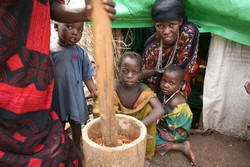
Food shortages and high malnutrition rates have hit residents of Lower and Middle Shabelle Photo: Manoocher Deghati/IRIN
Somalia: Alarming malnutrition rates as food crisis hits Shabelle region IRIN August 15, 2007
West Africa: Region making headway on food fortification IRIN August 14, 2007 (You will leave this site.)
Hunger Notes attends
UN debate on how to end hunger Tom Marchione May
15, 2007
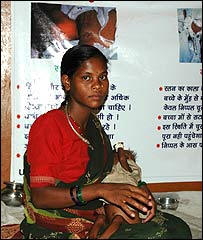
A malnourished child at a health center in India. Photo: BBC
Prime Minister Singh calls large Indian nutrition program a failure--says program has been poorly implemented BBC News January 16, 2007 (You will leave this site.)
HIV infection, leading to AIDS, is a major world problem, especially in Africa. In addressing the problem of HIV infection, there have been major concerns.
The first major concern is that African people and governments have been unable to afford the level of care available in the United States and other developed countries, where (expensive) anti-retroviral therapy has not cured HIV/AIDS, but has permitted substantially longer life for those infected. In the last several years this has been partially addressed by two major developments. First is a significant increase in developed country assistance. The second is the (partial) resolution of international property rights disputes over anti-retroviral (ARV) drugs, which has permitted a substantial reduction in the cost of ARV drugs supplied in developing countries.
The second major concern is the persistence of behavior patterns that permit HIV infection. The three principal ways of HIV infection are by sexual contact, though blood transmission (by drug users sharing the same needle, and by medical procedures, especially blood transfusion, not adopting proper safeguards) and by mother to child transmission. Sexual contact is the major means of HIV infection, with mother to child transmission a consequence of sexual contact. HIV testing will alert HIV-positive people that they are HIV positive, and ideally they will take measures to protect their sexual partners against infection, and to not have children or to take measures to reduce the possibility of HIV infection in the newborn.
Photo journal Charles Sako of Kenya: My life with HIV BBC News December 1, 2007 (You will leave this site.)
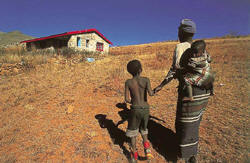
Most rural dwellers in the region live in extreme poverty. Photo: UNICEF
Southern Africa: HIV-induced famine's impact on agriculture PlusNews October 31, 2007
UN to cut estimate of AIDS epidemic--population with virus overstated by millions Craig Timberg Washington Post November 15, 2007
Rethinking AIDS strategy after a string of failures. In wake of canceled vaccine study, some experts are reemphasizing proven, low-tech prevention methods. Craig Timberg Washington Post November 1, 2007 (You will leave this site and be required to register [once] with the Post.)
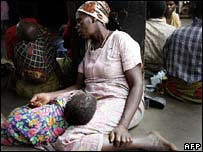
Rwanda recognized the seriousness of the AIDS epidemic early on. Photo: AFP
Parts of Africa see slowing in AIDS epidemic BBC News June 14, 2007 (You will leave this site.)
Brazil to break AIDS drug patent BBC News May 4, 2007 (You will leave this site.)
AFRICA: Feachem reflects on Global Fund journey IRIN News March 26, 2006 (You will leave this site.)
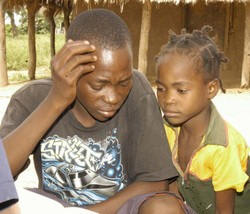
Custodio Julio, 16, and his sister Edita, 5. Every day
is a scramble for food. Photo:
©Alfredo Mueche/IRIN
Mozambique: 'I am in the darkness' -- AIDS orphan IRIN News March 15, 2007 (You will leave this site.)
Partners in Namibia working hard to achieve HIV treatment success, but rural areas not yet reached IRIN March 12, 2006 (You will leave this site.)
Burkina Faso: Finding the words to talk about HIV IRIN March 9, 2006 (You will leave this site.)
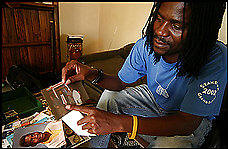
Faruk Maunge, 36, a high school counselor in Francistown, Botswana, points out one of several friends who died of complications from AIDS. Photo: ©Craig Timberg /Washington Post)
Speeding HIV's deadly spread: multiple, concurrent partners drive disease in Southern Africa Craig Timberg Washington Post March 2, 2007 (You will leave this site and be required to register [once] with the Post.)
Other diseases and health problems
Globally, deaths from measles drop sharply. Little-known campaign has boosted immunization rates in developing world David Brown Washington Post November 29, 2007 (You will leave this site and be required to register [once] with the Post.)
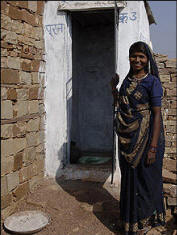
"No one was hygienic or clean before," says Fulbati. "We were all living in unclean conditions. Malaria, diarrhea, fever, vomiting; they were common. Now it's not so bad." Photo: BBC
Toilet conference opens in Delhi--40 countries take part Sanjoy Majumder BBC News October 31, 2007 (You will leave this site.) In pictures: India's sanitation struggle BBC News October 31, 2007 In Katanga slum in Kampala, Uganda a visit to a public restroom is a luxury which comes at a price Joshua Mmali BBC News September 19, 2007 (You will leave this site.)
West Africa: New approach to malaria recommended, with more funds going to indoor spraying and new anti-malarial drugs, and less to bednets IRIN October 24, 2007 (You will leave this site.)
Obesity epidemic is global, study shows. People are getting fatter in all parts of the world, with the possible exception of south and east Asia, a one-day global snapshot reveals BBC News October 23, 2007 (You will leave this site.)
Child mortality at record low thanks to immunization and anti-malaria measures, UNICEF reports BBC News September 13, 2007 (You will leave this site.)

Mathare slum in Nairobi is one of the
biggest informal settlements in Africa. It has faced
increasing difficulties in obtaining
water due to cuts by official suppliers as well as the
actions of cartels, gangs and illegal vendors.
Photo: Julius Mwelu/IRIN
Kenya: the fight for water, a valuable slum commodity IRIN August 14, 2007 (You will leave this site.)
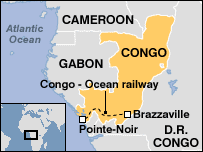
Congo train to combat malaria: a two-day mission to deliver 300,000 mosquito nets by rail to 10% of Congo's population has begun BBC News August 11, 2007 (You will leave this site.)
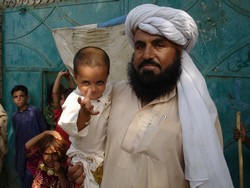
A father along the border between
Afghanistan and Pakistan waits to have his son
vaccinated against polio. The virus remains endemic in
both countries. Photo: Nima Abid/WHO
Afghanistan-Pakistan: cross border polio campaign targets 40 million children IRIN August 7, 2007 (You will leave this site.)
Nigeria: conquering polio's last frontier Ania Lichtarowicz BBC News August 1, 2007 (You will leave this site.)

Counterfeit Colgate toothpaste may contain diethylene glycol (DEG), normally used in anti-freeze. The Mozambique authorities have banned the sale of the toothpaste. Photo: AP
Maputo seizes 'toxic toothpaste' BBC News August 6, 2007 (You will leave this site.)
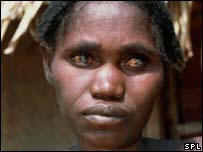
River blindness is caused by infection with a parasitic worm. Photo: SPL
River blindness resistance fears BBC News June 14, 2007 (You will leave this site.)
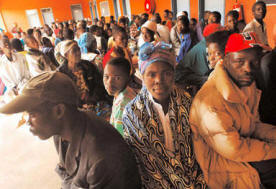
Medecines sans Frontieres: Lack of nurses 'killing Africans' BBC News May 24, 2007 (You will leave this site.) See the MSF report (PDF file)
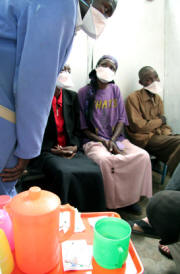
TB patients are counseled before taking their drugs at a
clinic in the Kenyan capital, Nairobi. Photo: Siegfried/IRIN
Mosquito nets cut birth problems from malaria Jill McGivering BBC News April 19, 2007 (You will leave this site.)
East Africa: TB control programs inadequate - WHO IRIN News March 23, 2007 (You will leave this site.)
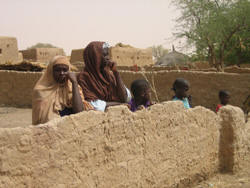
59 percent of the thousands of children that die in Niger every year die because of problems related to malnutrition, according to UNICEF Photo: Nicholas Reader/IRIN
Sahel: strategic shift in battle against region's high death toll IRIN News April 26, 2007 (You will leave this site.)
Global vaccination campaign cuts measles deaths BBC News January 19, 2007 (You will leave this site.)
Why children die for lack of a toilet United Nations Development Program November 9, 2006
Hunger Notes 2007 2006 Nutrition, Health and Population Hunger Notes Home Page